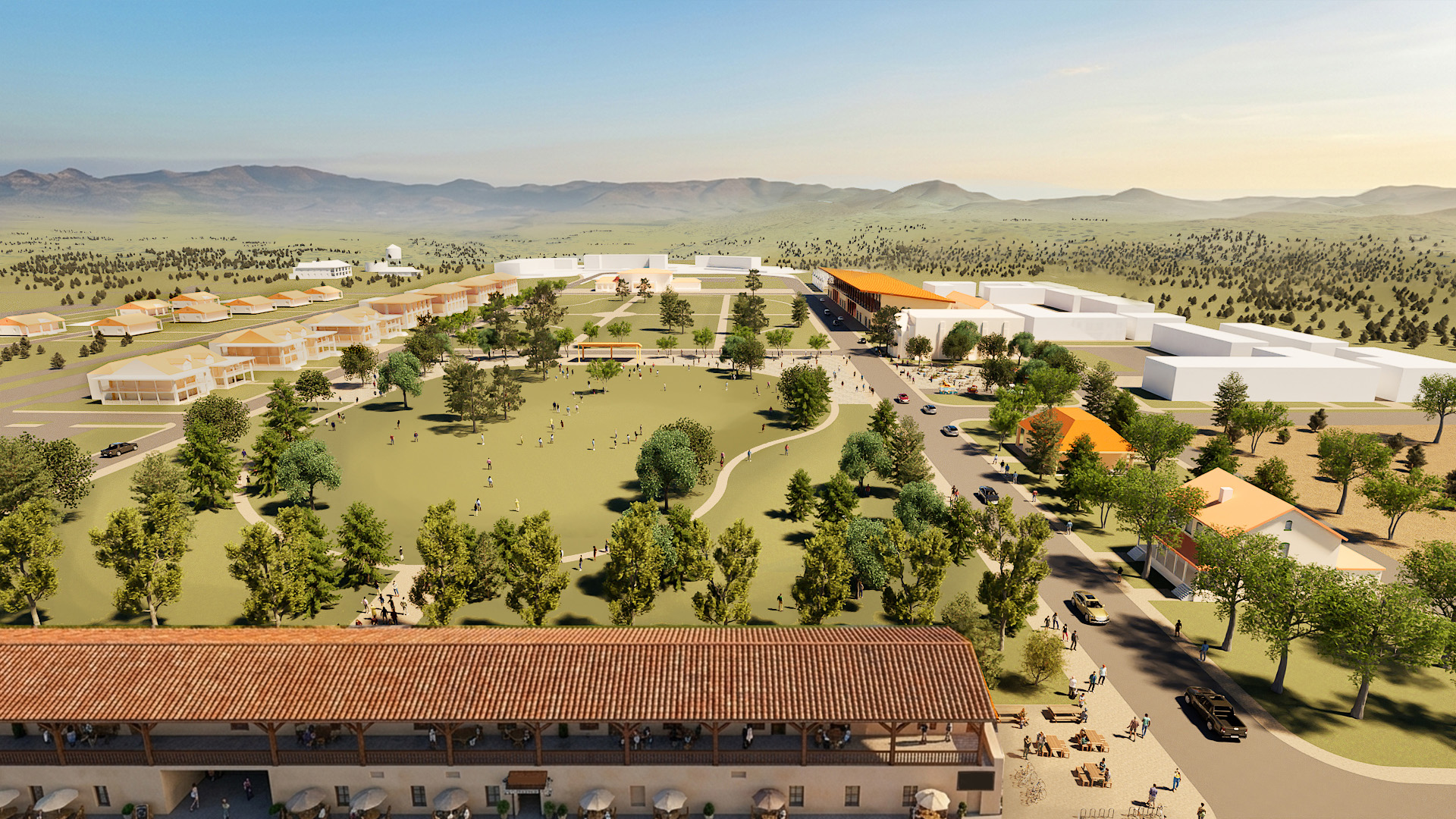
Welcome to the Fort Bayard Revitalization Plan!
The Fort Bayard Revitalization Plan is a guiding document intended to preserve and revitalize the National Historic Landmark, with the goal of repositioning it as a successful, community and tourism driven asset. The plan aims to contribute to regional economic development while celebrating Fort Bayard’s cultural heritage. Shaped by extensive community engagement, it balances historic preservation with improved public access and outlines recommendations to support the site’s revitalization.
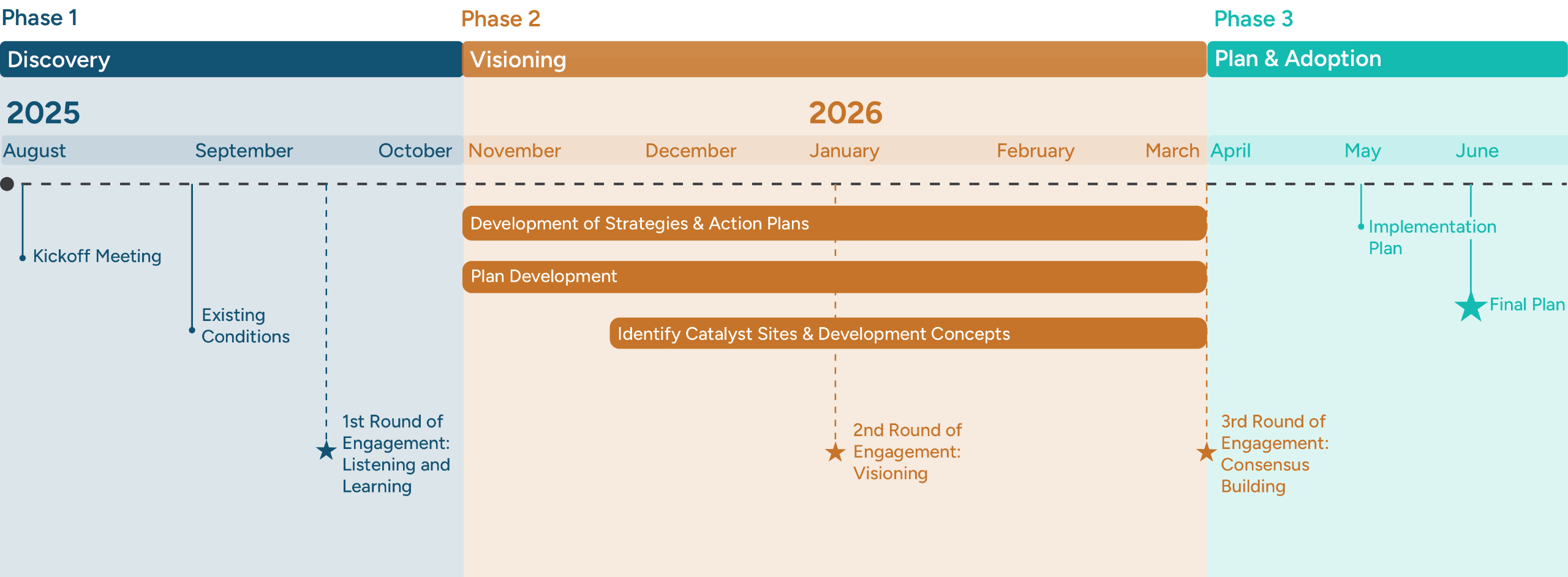
The project consists of three phases. Phase 1, Discovery, analyzed existing conditions and market trends and engaged the local community to identify needs, challenges, and opportunities. Phase 2, Visioning, was a collaborative process in which three design options were presented to better understand community priorities, ensuring the project is shaped by and for the community. Phase 3, Plan and Adoption, focuses on incorporating community feedback to refine the design concept while simultaneously developing a timeline, strategies, and funding mechanisms to finalize the plan for adoption and implementation.
Project Timeline
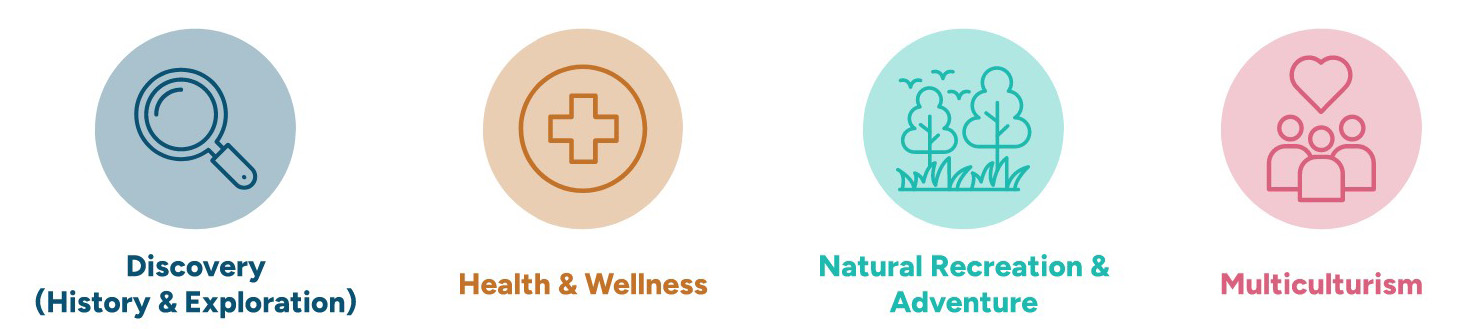
Through research and analysis conducted during the Discovery phase, four guiding themes emerged that reflect what the revitalization effort aims to preserve and enhance: Discovery, Multiculturalism, Health and Wellness, and Natural Recreation and Adventure. Together, these themes establish a cohesive framework to guide the transformation of Fort Bayard into a restored heritage site that celebrates the rich history and provides unique opportunities for tourists and residents alike.
The Discovery theme highlights opportunities for exploration and learning throughout the site. Closely connected is the Multiculturalism theme, which reflects Fort Bayard’s rich and layered history shaped by many different groups over time. The plan embraces this legacy by supporting diverse cultural narratives and accommodating multicultural celebrations and events.
The Health and Wellness theme builds on Fort Bayard’s history as a place of healing, including the historic hospitals, while recognizing its potential to support healthy lifestyles for local residents today. Finally, the Natural Recreation and Adventure theme acknowledges the site’s proximity to regional outdoor destinations and its existing amenities, such as trails and disc golf, while envisioning expanded recreational opportunities.
3 Design Approaches
During the Visioning phase, three design approaches were developed, each focusing on different on-site programming. All design approaches prioritize preservation of the historic core, with the intent to preserve and restore as many existing buildings as possible. These approaches were not final and were intended to spark discussion and gather input to inform the final design concept. Community members were encouraged to share what they liked about each option, as elements could be mixed and matched to create a design that best reflects shared priorities for the site.
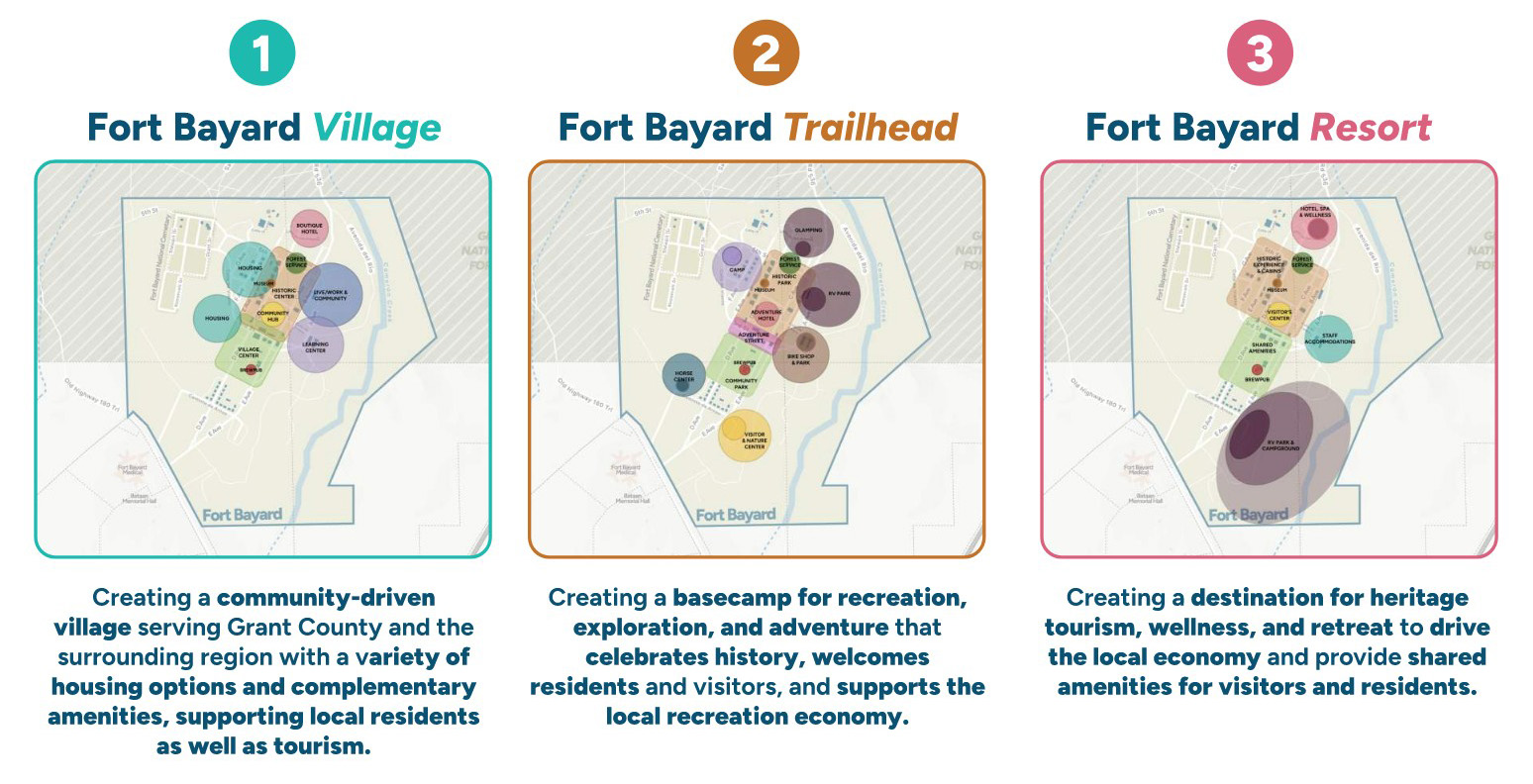
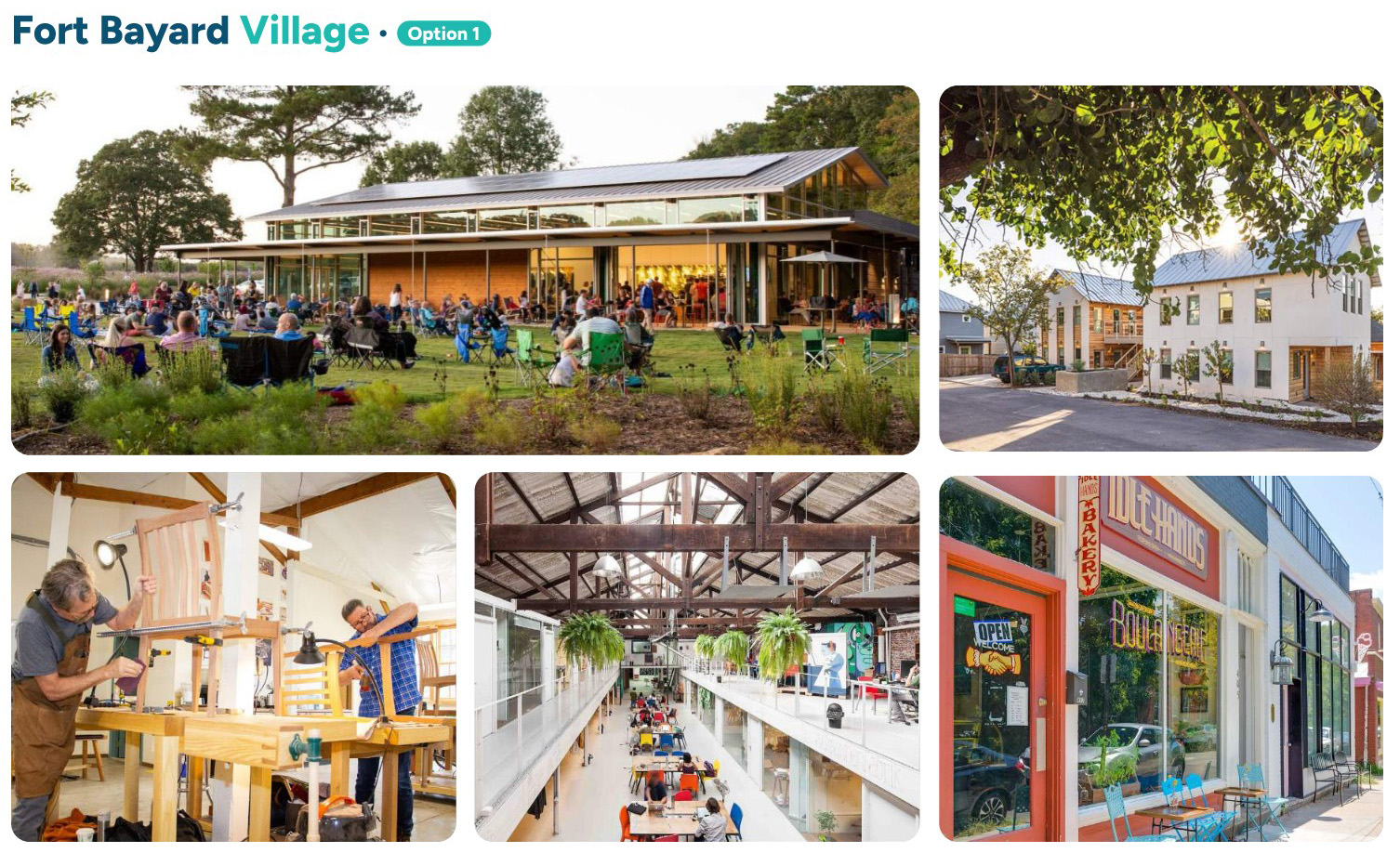
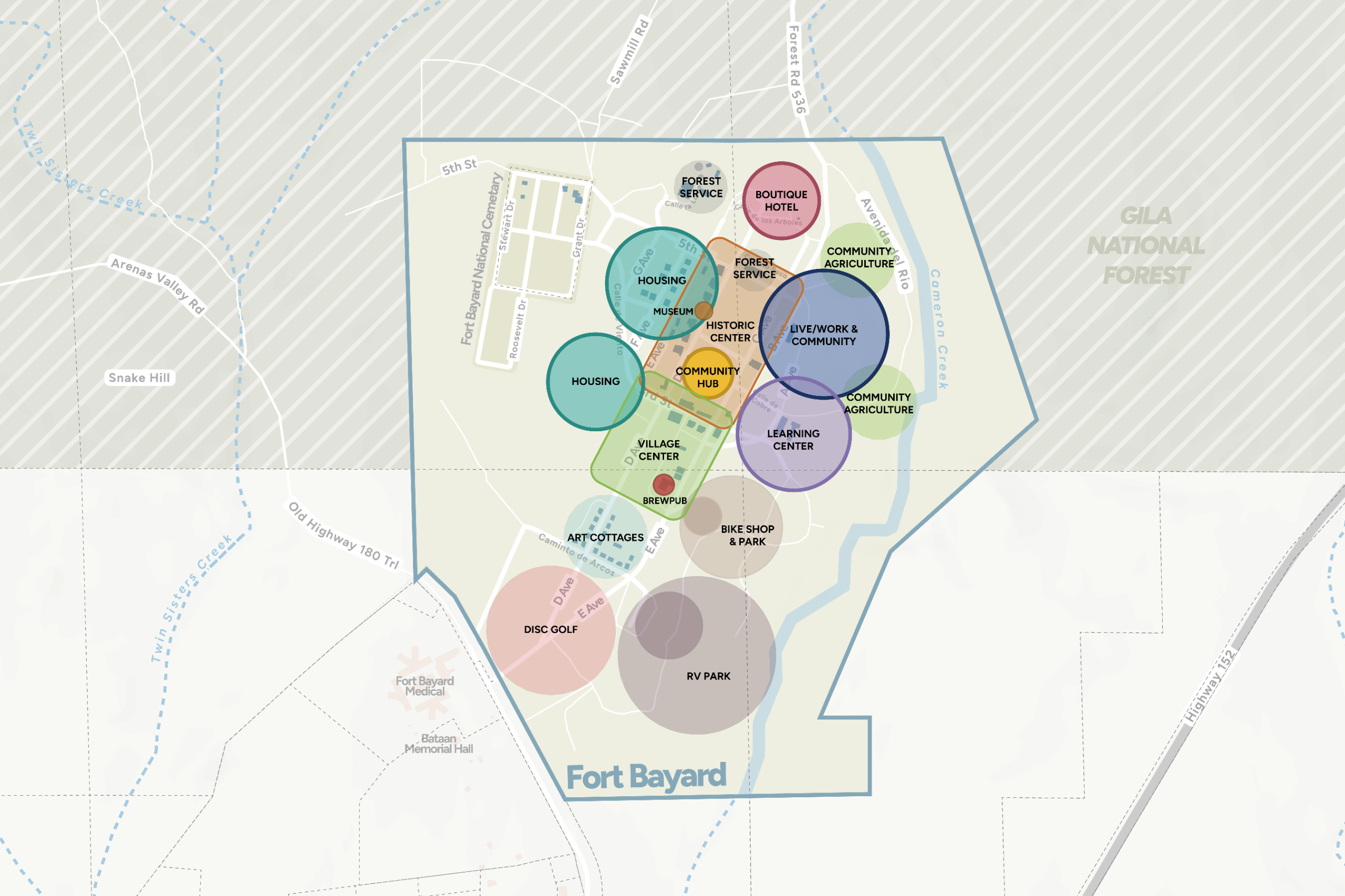
The Fort Bayard Village design option is a community-driven approach designed to serve Grant County and surrounding regions by offering a range of housing options and complementary community amenities. This concept focuses on supporting local residents while also functioning as a visitor destination. Potential amenities include a learning center, community center, library, small shops, offices, and neighborhood-scale retail.
The Village concept envisions a village center that integrates housing, retail, offices, and community amenities to create a vibrant place to live, work, and visit. Proposed uses are intended to fill existing gaps in the surrounding region while complementing nearby uses and strengthening the overall community fabric.
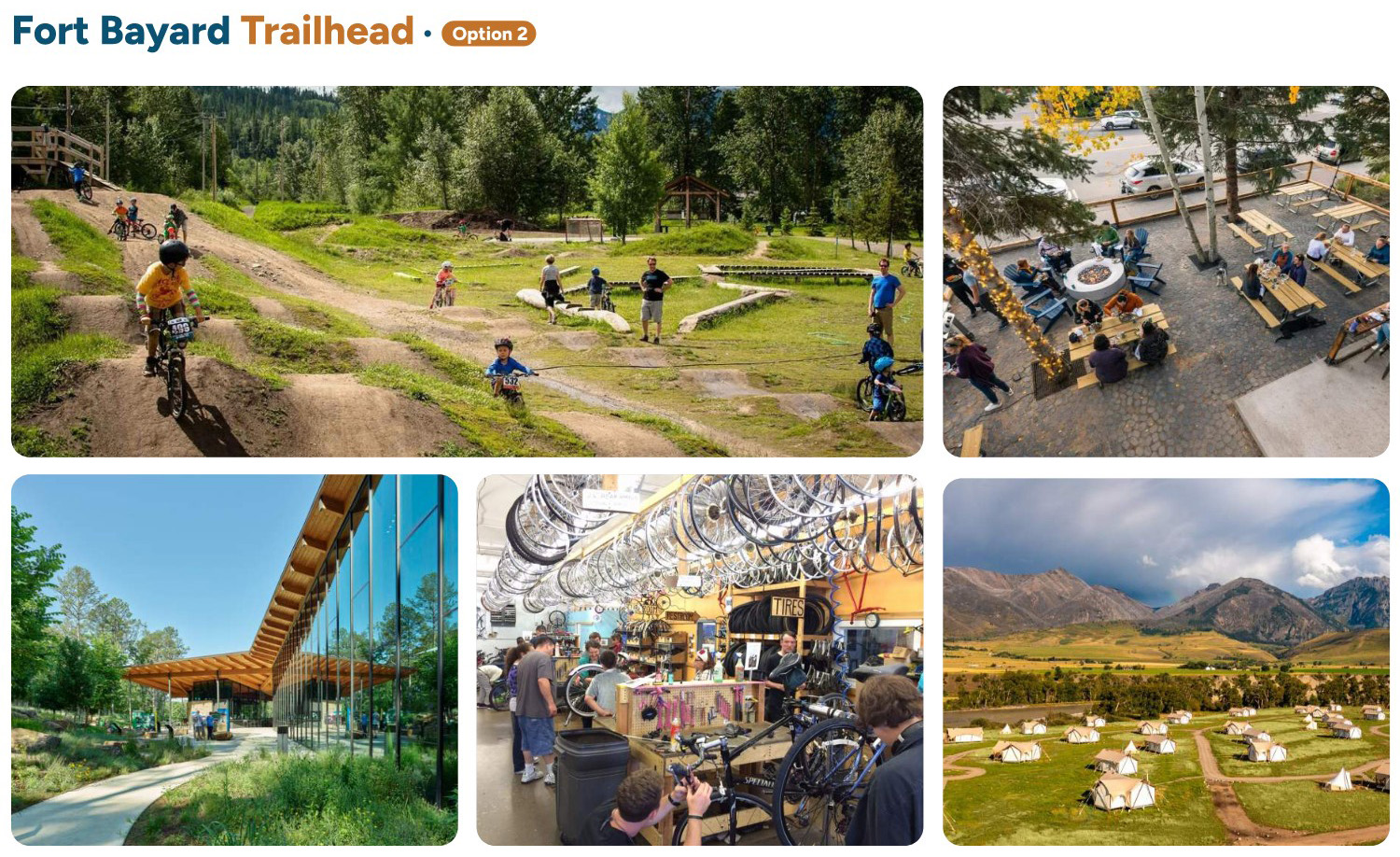
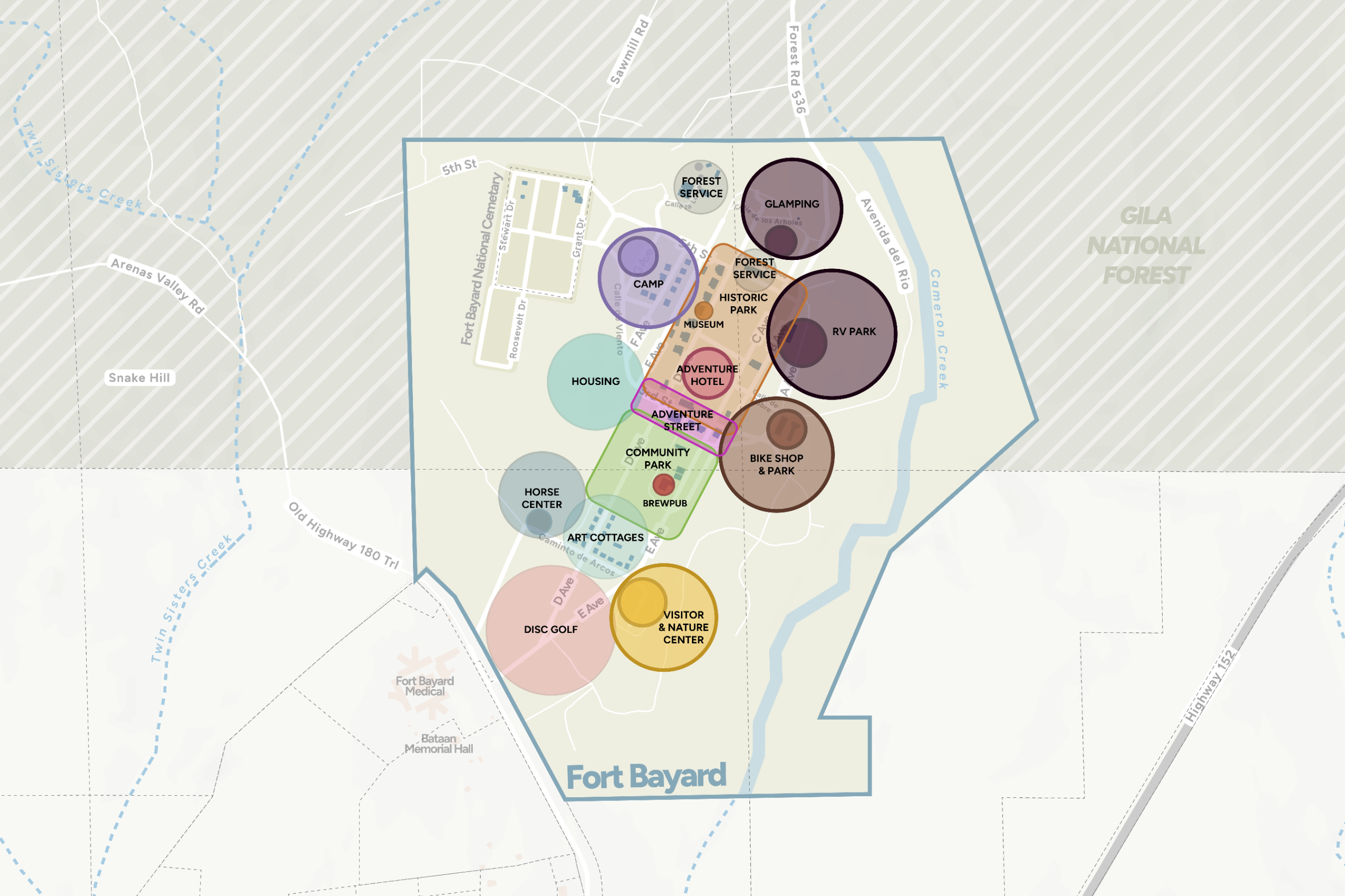
The Fort Bayard Trailhead is a recreation-focused design approach centered on natural recreation and adventure that welcomes both residents and visitors while supporting the local recreation economy. This concept builds on Fort Bayard’s proximity to regional outdoor destinations and its existing recreational assets. Key amenities may include a bike park and shop, a nature-focused visitor center, an adventure hotel, RV parking, glamping sites, camping areas, and a community park.
The Trailhead concept envisions Fort Bayard as a regional gateway to outdoor recreation, making trails and amenities more accessible to the local community while attracting visitors from beyond the region. Proposed uses are intended to strengthen recreation-based tourism while complementing existing and future outdoor opportunities at the site.
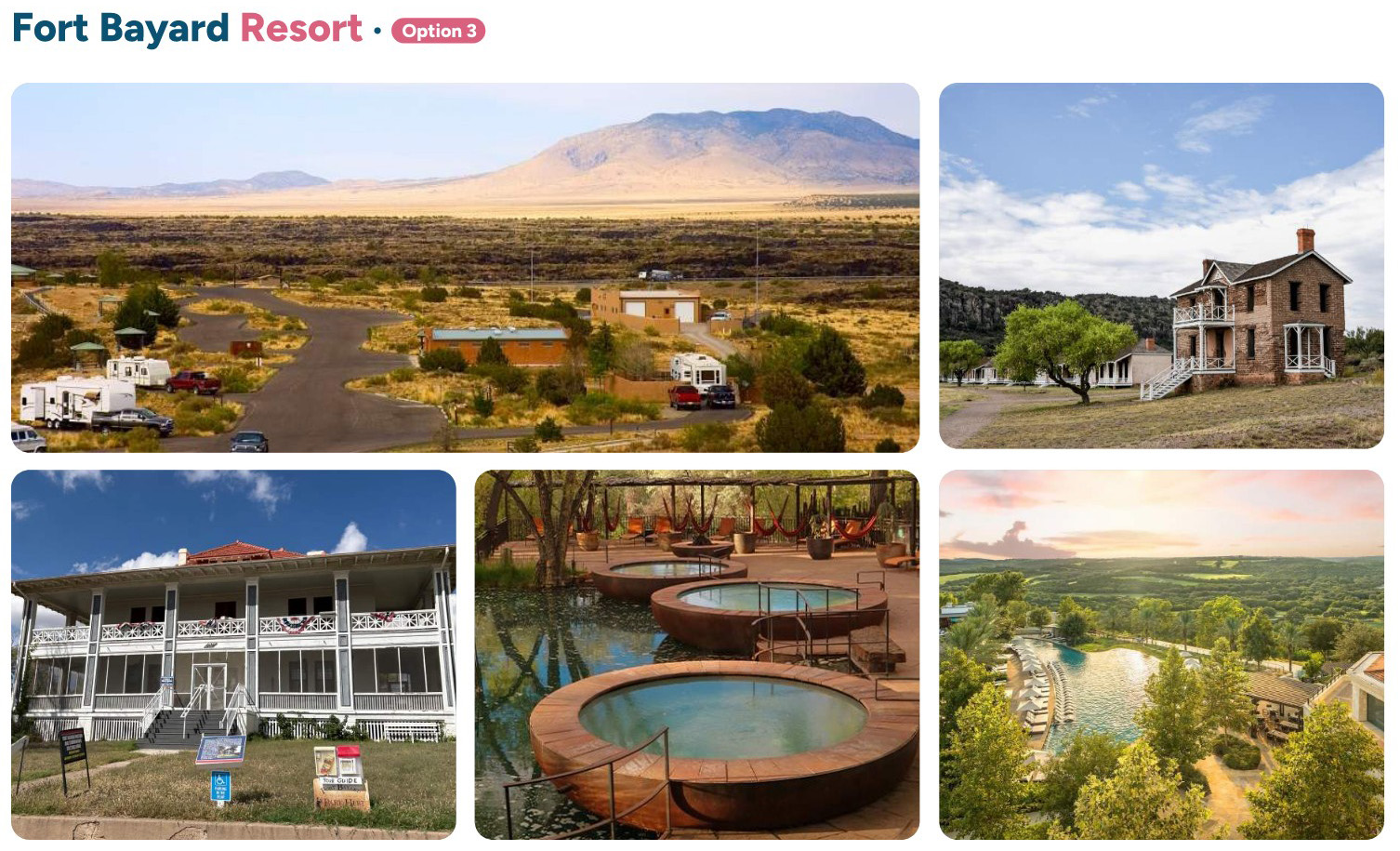
The Fort Bayard Resort is a destination-focused design approach centered on heritage tourism, wellness, and retreat, intended to drive the local economy while providing shared amenities for both visitors and residents. This concept builds on Fort Bayard’s historic character and tranquil setting to create a place for rest, learning, and rejuvenation. Key amenities may include an RV park and campground, a hotel with spa and wellness facilities, rehabilitated historic cabins, and a range of shared indoor and outdoor amenities.
The Resort concept envisions Fort Bayard as a welcoming destination for extended stays and retreats, offering experiences rooted in history, health, and nature. Proposed uses are designed to support economic vitality while complementing the site’s cultural resources and enhancing access to wellness-oriented programming.
Where We Are Now: Draft Master Plan Design
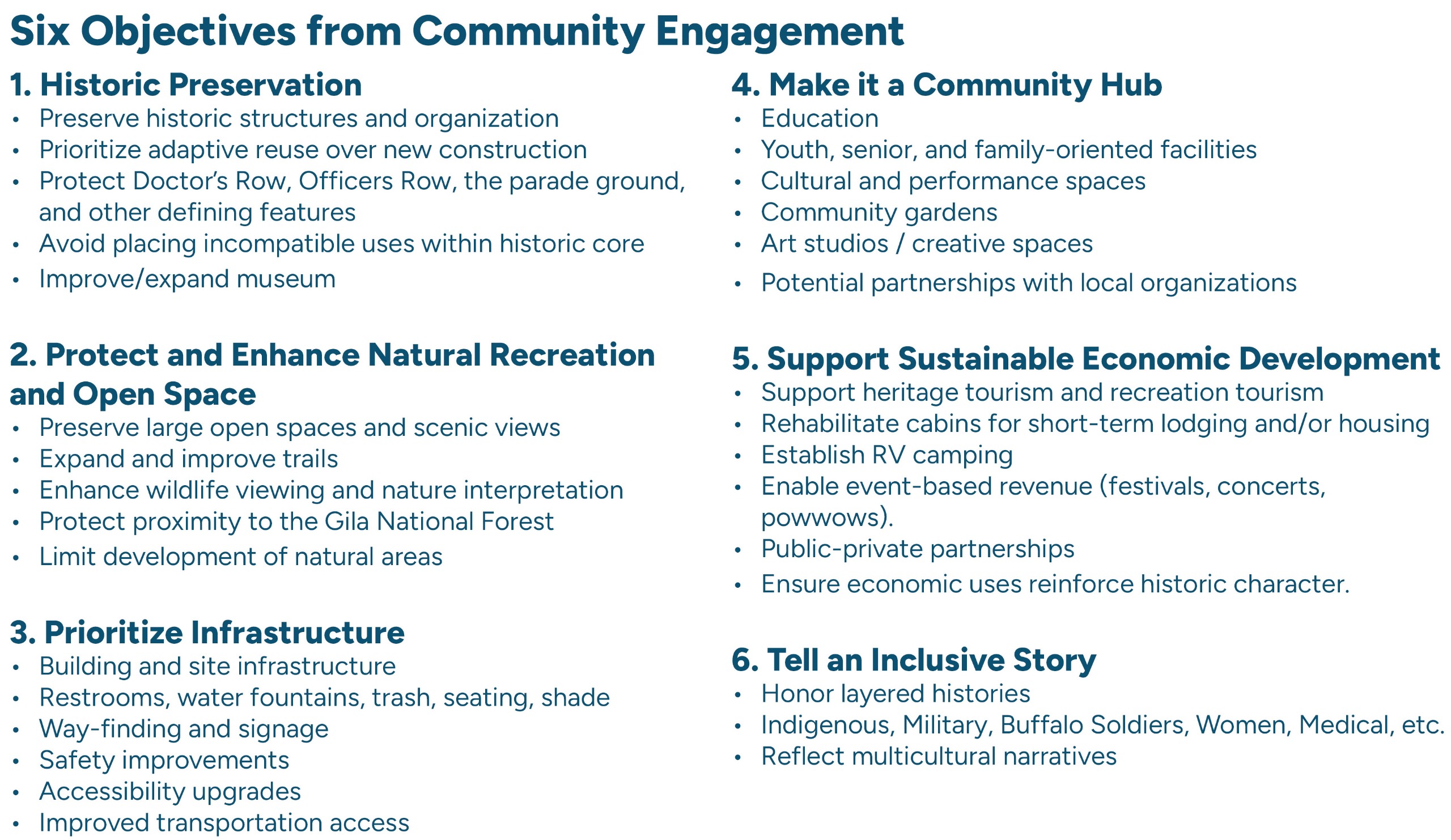
To develop a master plan design that truly responds to the needs and priorities of the community, the team compiled input gathered throughout the engagement process to guide the design process. All feedback received during previous meetings was synthesized into six key objectives that informed the plan’s design development: historic preservation, protection and enhancement of natural recreation, prioritization of infrastructure, positioning Fort Bayard as a community hub, support for sustainable economic development, and telling an inclusive story of the site.
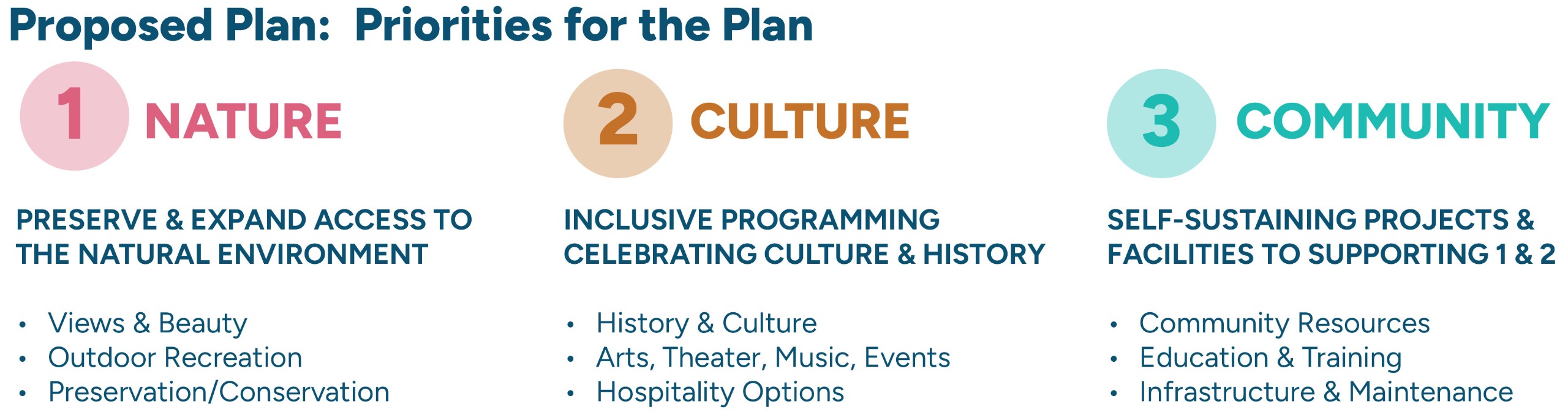
From these six objectives, three overarching priorities were identified to guide the design: Nature, Culture, and Community. These priorities help ensure the design responds to community feedback gathered in previous meetings while providing a clear framework for organizing the site.
The first priority, Nature, focuses on preserving and expanding access to the natural environment by protecting views and scenic beauty, enhancing outdoor recreation opportunities, and supporting preservation and conservation efforts.
The second priority, Culture, emphasizes inclusive programming that celebrates history and identity by highlighting the site’s heritage through arts, theater, music, events, and a variety of hospitality options.
The third priority, Community, centers on creating self-sustaining projects and facilities that support both nature and culture, including community resources, education and training opportunities, as well as the infrastructure and maintenance needed to sustain the overall plan.
Design Development
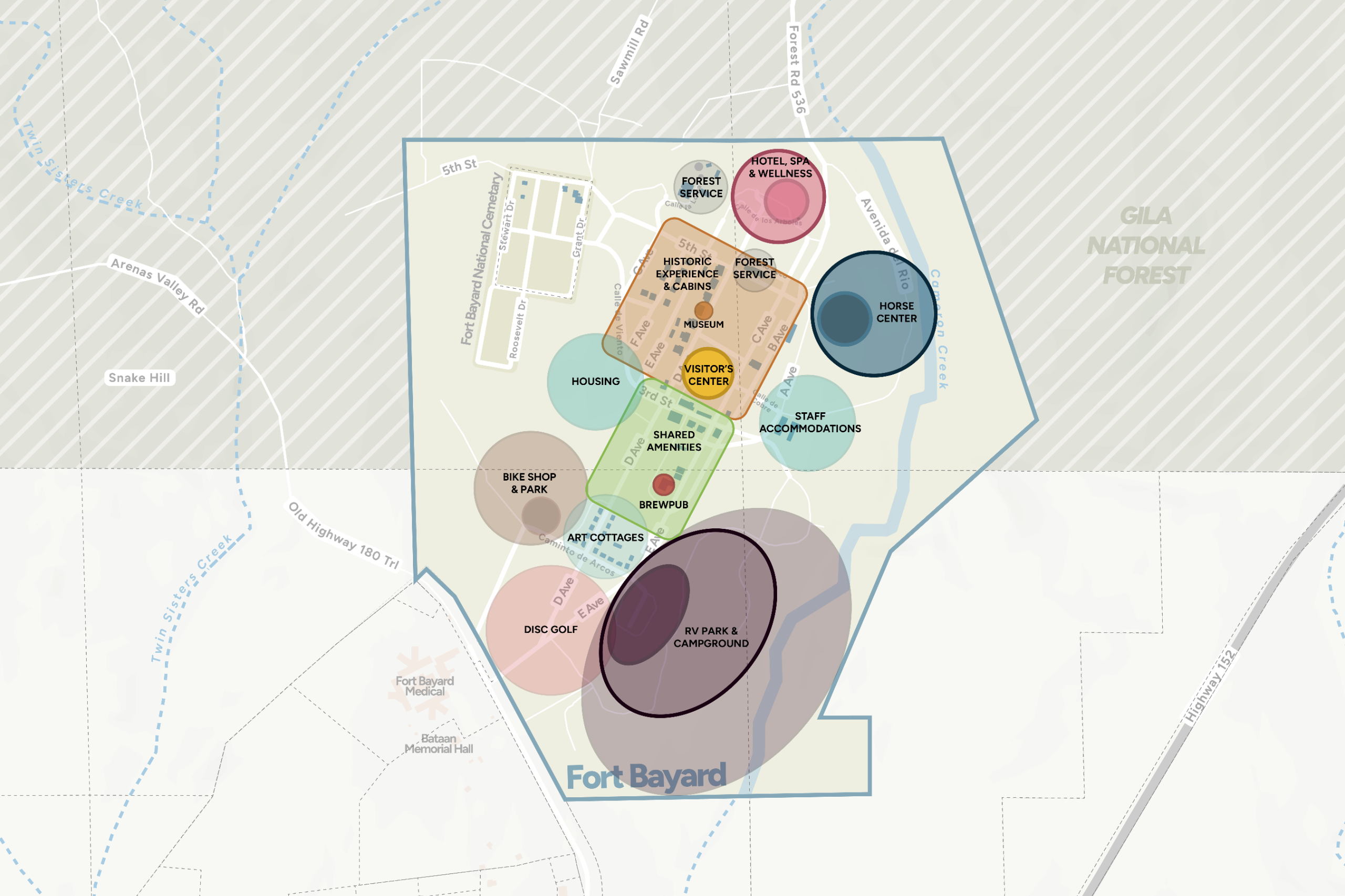
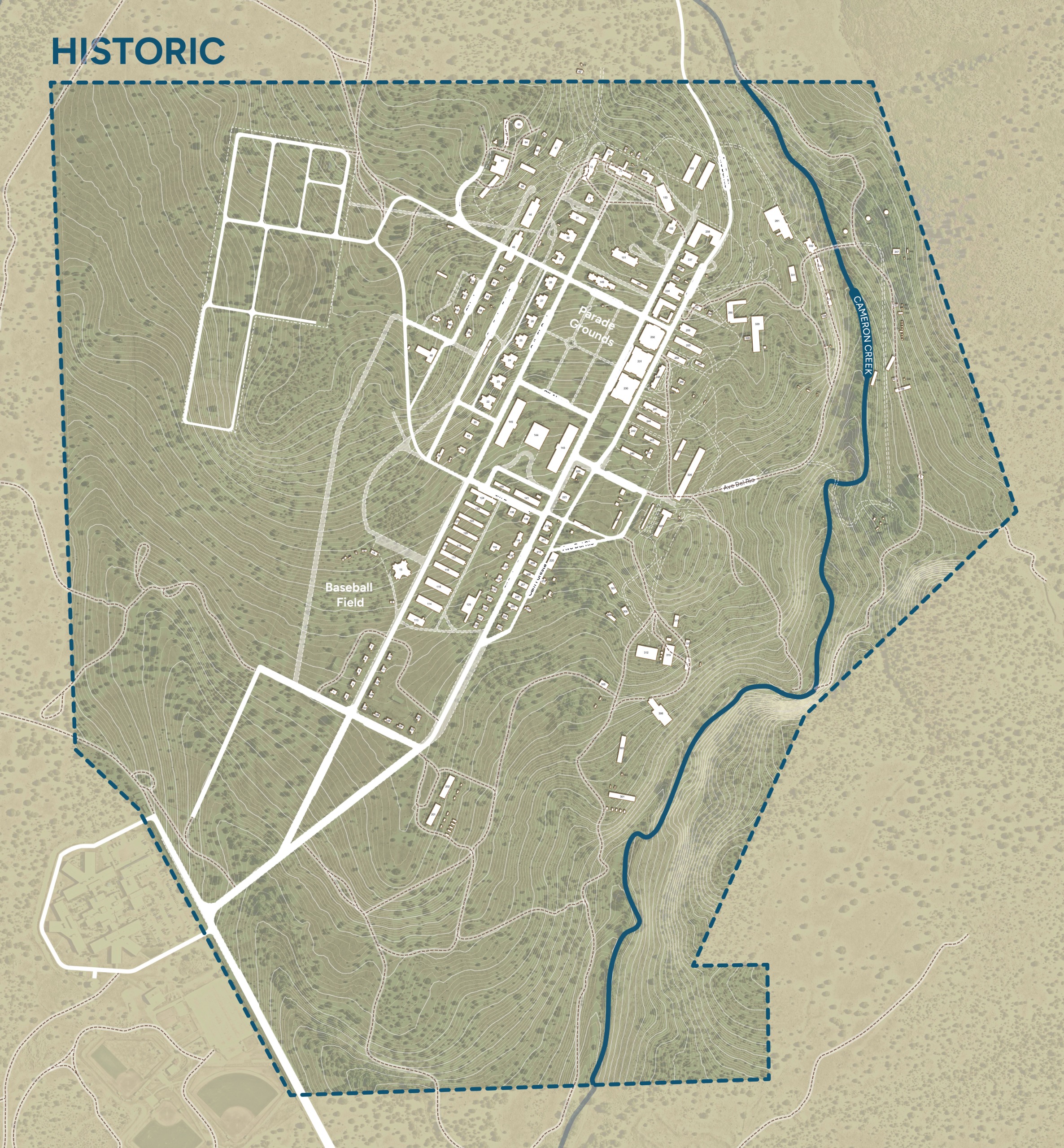
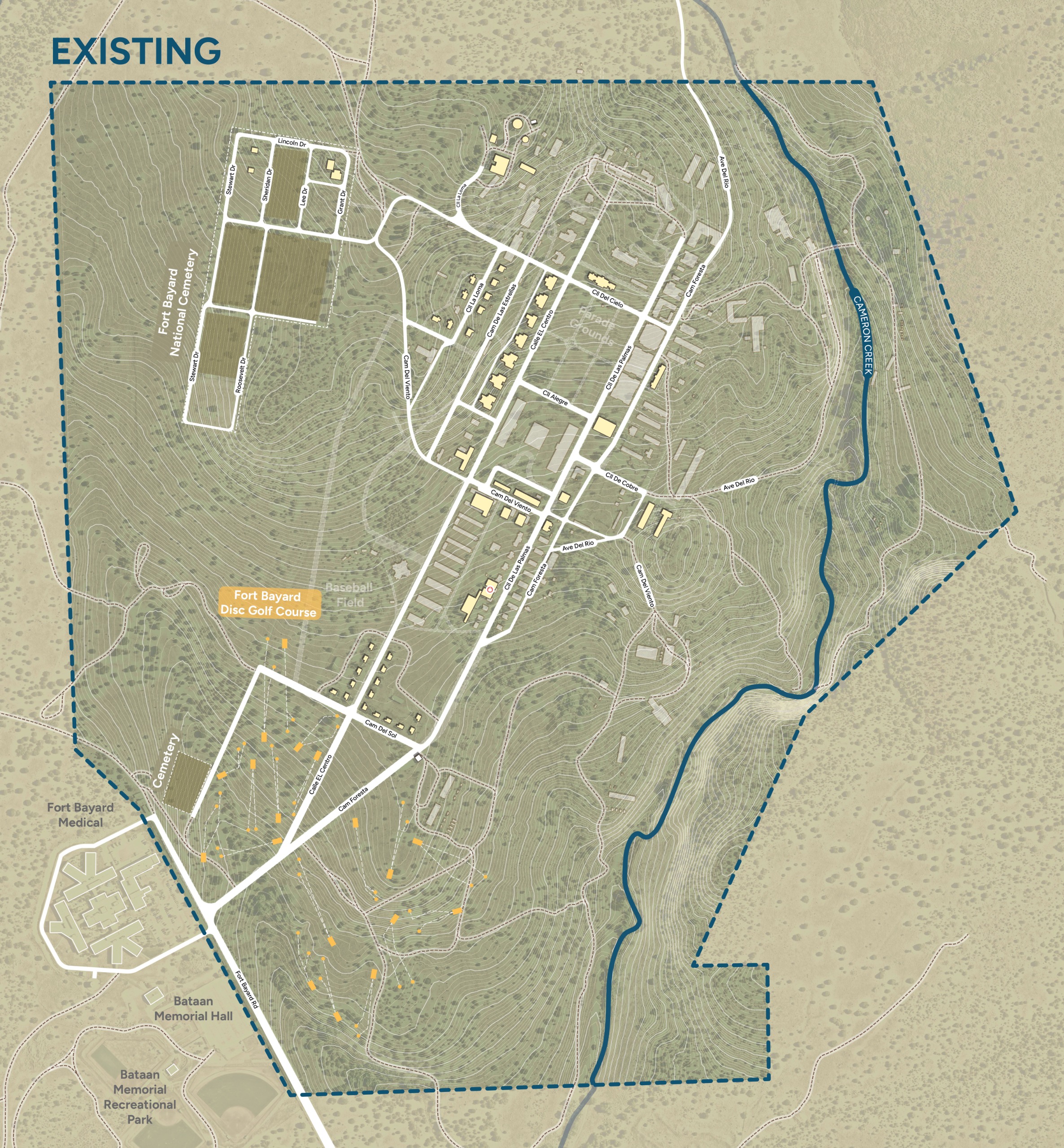
From these priorities, the proposed plan was developed. The historic plan of Fort Bayard from 1925 was studied in depth to understand historical areas of development and uses throughout the site. The proposed plan layout and overall structure aligns restoration and development with the existing and historical layout, with primary roads and areas of development to remain in place. The existing plan overlaid on the historic plan shows that there was quite a bit more development on the site when the site was operating as a Fort and a medical facility. This knowledge of existing and historical layouts informs and drives the proposed plan.
Restoration and development is concentrated in the historic core of the site around the parade grounds and along the two primary roadways on either side leading to the parade grounds. Conservation of natural areas outside this main development area preserves views and expands on trails and recreation activities and Fort Bayard’s connection to the Gila National Forest.
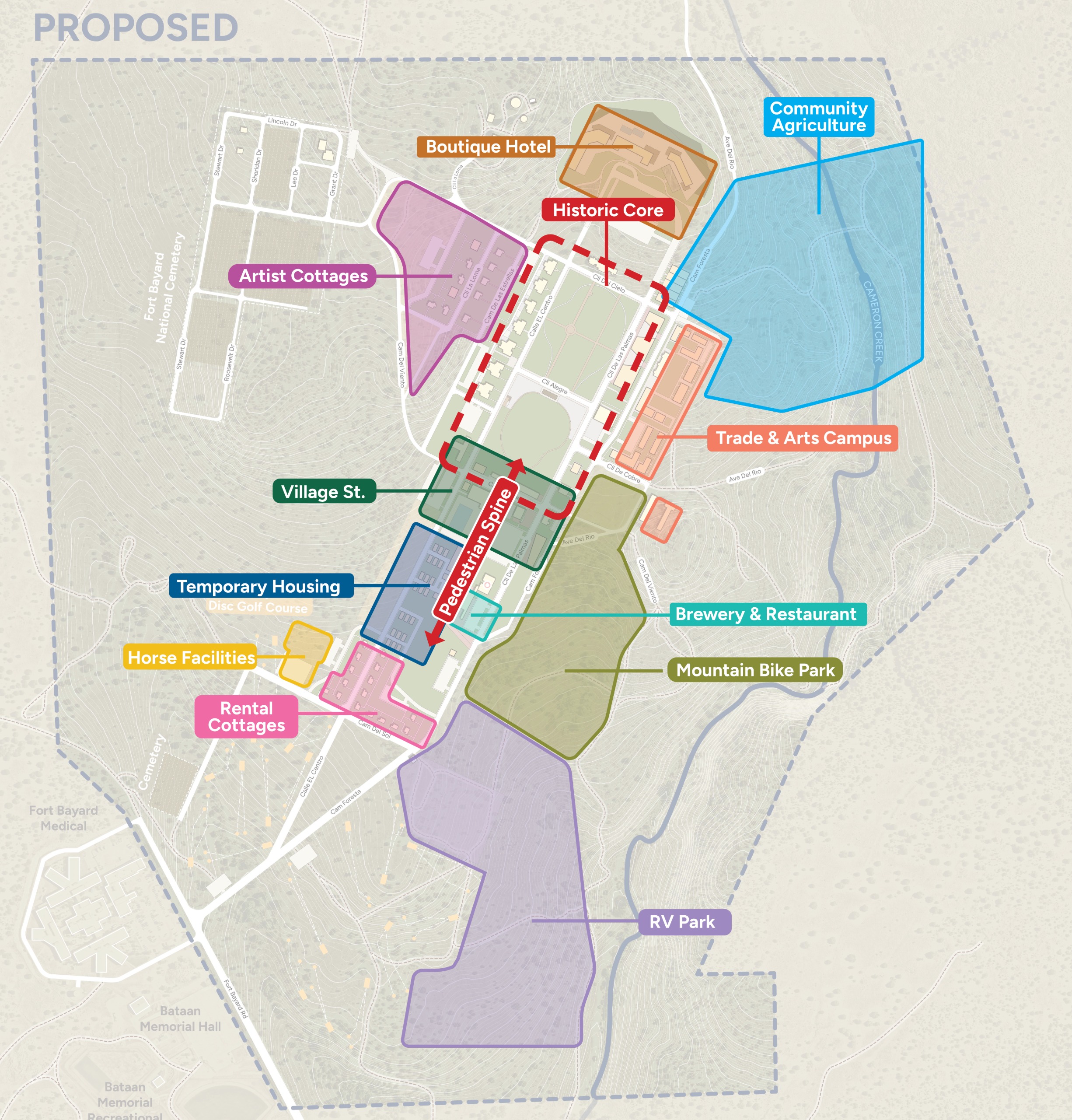
The master plan design focuses on activating the historic core, with the parade grounds serving as a central anchor to the surrounding uses. The historic core is outlined in red in the diagram below. This includes the parade grounds, adjacent demolished hospital site, and parcels directly adjacent on each side of this central core.
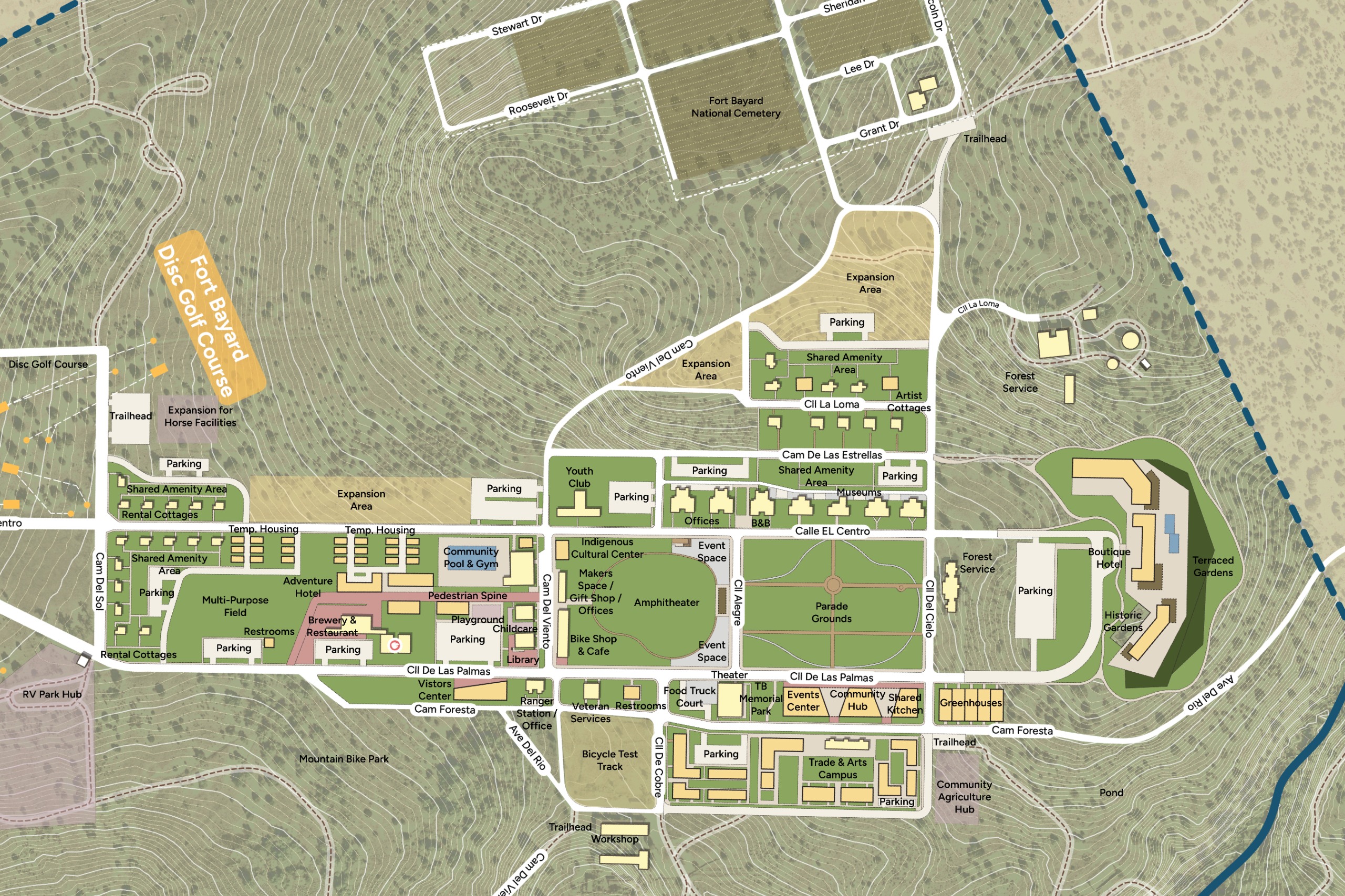
A pedestrian spine runs between the restored Sally Port entrance to the historic core and south to the historic steam plant building, which could be developed into a brewery and restaurant with outdoor garden plaza. This spine would be established early on and development along this spine could follow in later phases.
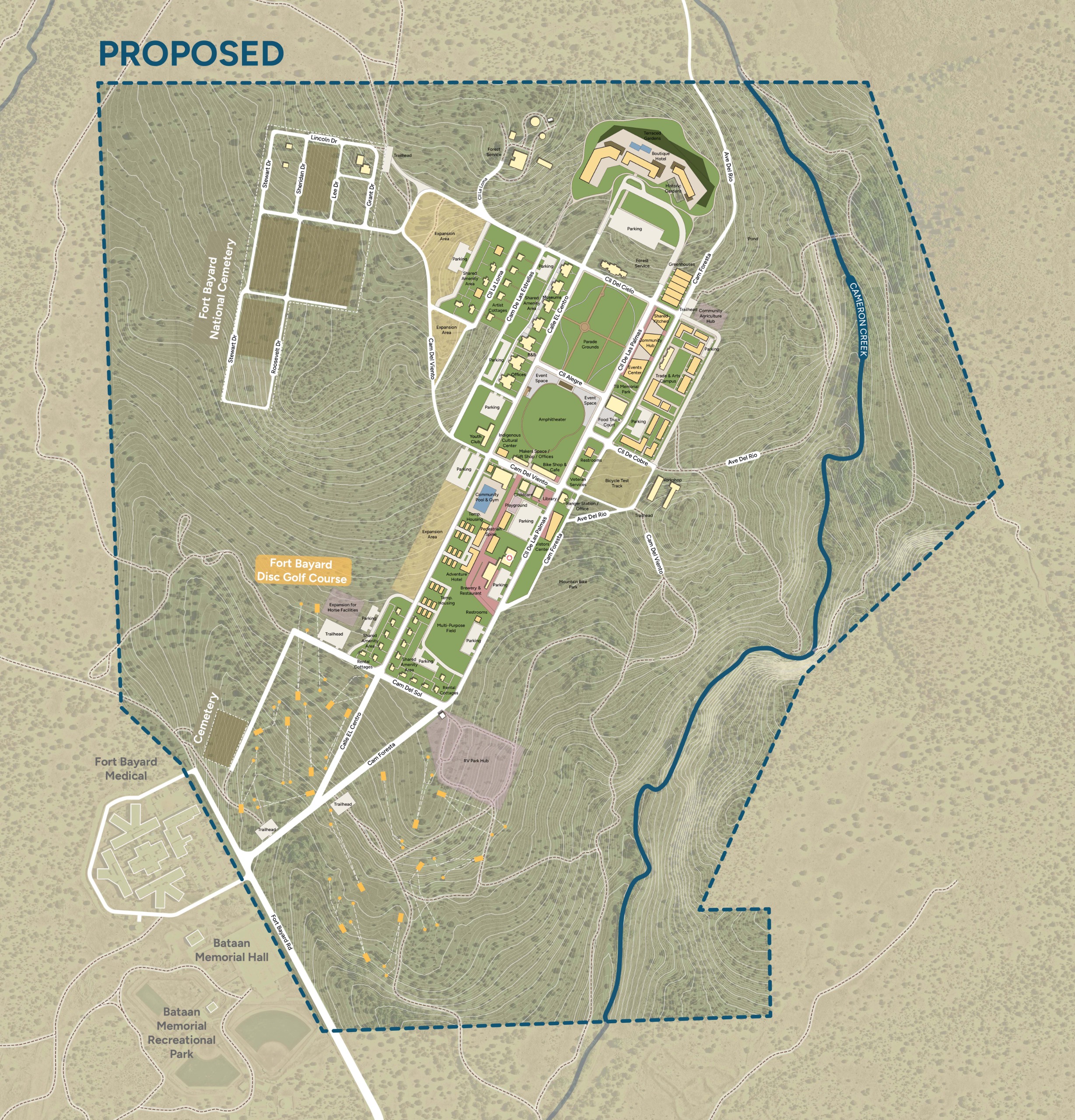
Perpendicular to this pedestrian spine, the village street zone includes the street along the historic Sally Port and the buildings on the sides and ends of this street. This area would be a multi-modal area of activity with a diverse mix of uses such as a community pool and gym, Indigenous cultural center, café, office space, bike shop, childcare facility, and library. Adjacent to the parade grounds, a trade and arts campus is proposed to provide local residents with educational and workforce development opportunities. North of the parade grounds, a boutique hotel is envisioned as a higher-end lodging option on site. West of the parade grounds, artist cottages are proposed, supporting an artist-in-residence program with opportunities for partnerships with local schools, as well as retail and programming throughout the site.
Moving toward the site entrance, the plan proposes an RV park adjacent to the existing disc golf course. Rental cottages are located near the entrance of the site, north of Camino del Sol Street, utilizing the existing structures. Next to the rental cottages, horse facilities are proposed, strategically located close to the trailheads. In addition, temporary housing is proposed north of these cottages to provide accommodations for short-term local workers.
Restoration of existing buildings and establishing revitalized uses of those buildings is important to drive the success of the plan. The supporting use zones and amenities surrounding the historic core and central spine and could be phased incrementally.
Master Plan Design
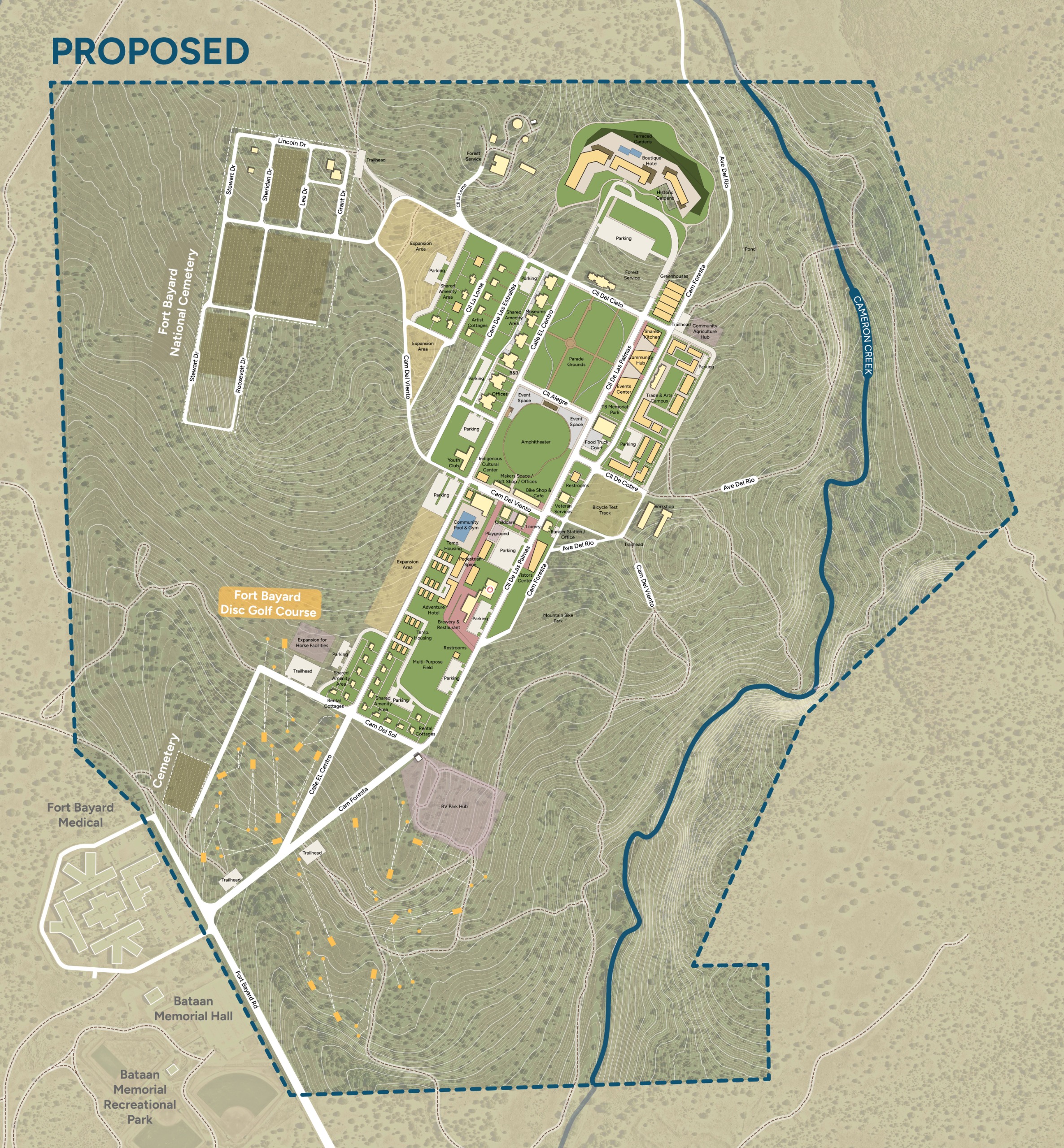
The site plan above illustrates the master plan design presented at the third public meeting. It provides a more detailed view of the proposed site programming and layout.
Take a closer look at the proposed master plan design, click on the images below.
Implementation
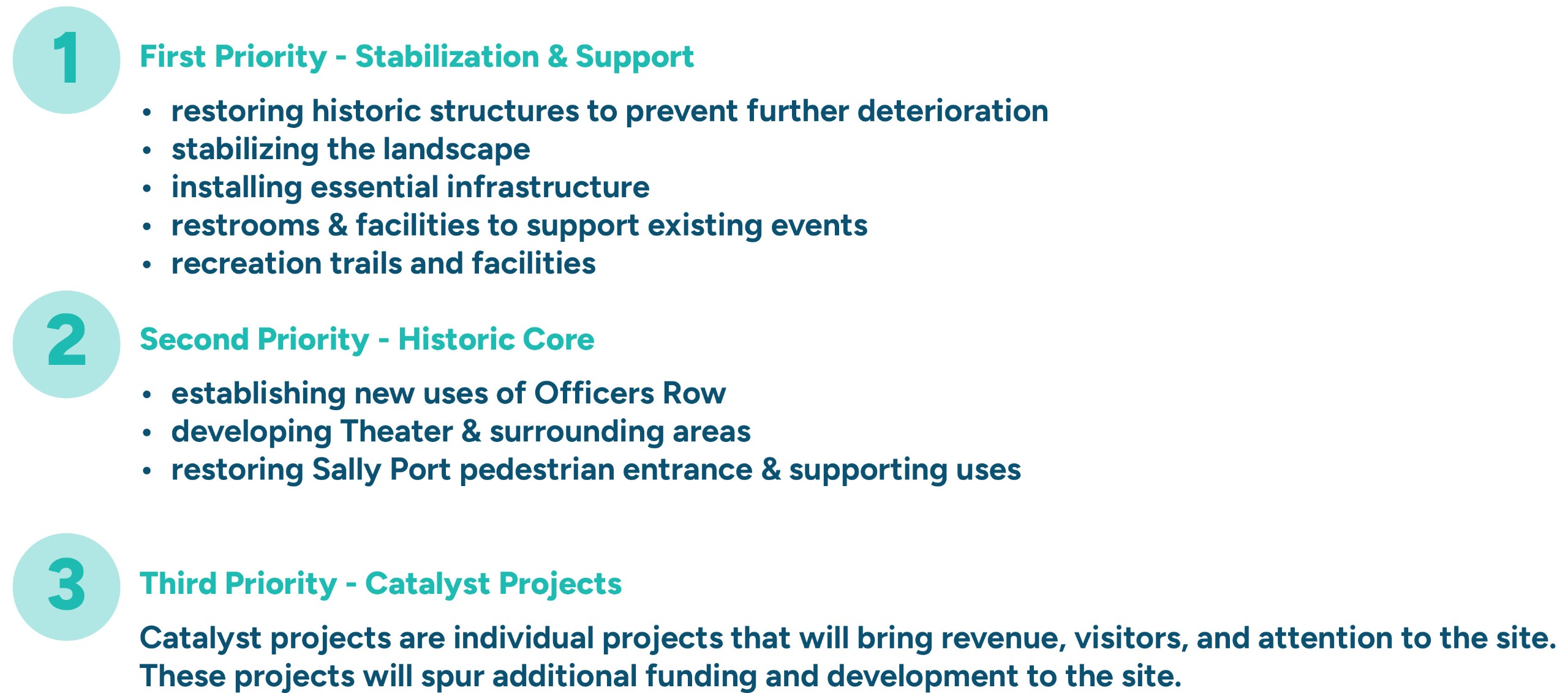
The plan is organized into three priorities: stabilization and support, historic core improvements, and catalyst projects. Recognizing that the site is currently experiencing deterioration, the first priority focuses on stabilizing and preserving existing assets through structural repairs, landscape stabilization, infrastructure upgrades, and support for recreation and events. The second priority centers on revitalizing the historic core by introducing new uses to the Officers Row and restoring key areas and entrances. The third priority includes catalyst projects designed to attract visitors, generate revenue, and stimulate further investment and development across the site.
Next Steps
The team will compile and process all feedback received during the previous public meeting, as well as through the online platform. This input will advise refinements made to the proposed final master plan design. Simultaneously, the team will work on developing the final master plan document and plan implementation. Please stay tuned for the completed master plan document.
If you have additional questions, please visit our FAQ page. You may also contact Leilani Nelson at leilani.nelson@stantec.com or Lorena Gonzalez at lorena.gonzalez@stantec.com for other project related questions.


